
Why Choosing the Right System Matters
Air conditioning is not one-size-fits-all. The right system depends on the size and layout of your property, how many rooms you want to cool, your budget, and how much disruption you can accept during installation. A poor choice can lead to higher energy bills, uneven temperatures, or a unit that is too noisy for a bedroom. A well-matched system will keep you comfortable quietly and efficiently for many years.
Most modern systems also work as air-to-air heat pumps, which means they can heat your home in winter as well as cool it in summer. For many households, this makes air conditioning a year-round investment rather than a summer luxury.
1. Wall-Mounted Split Systems
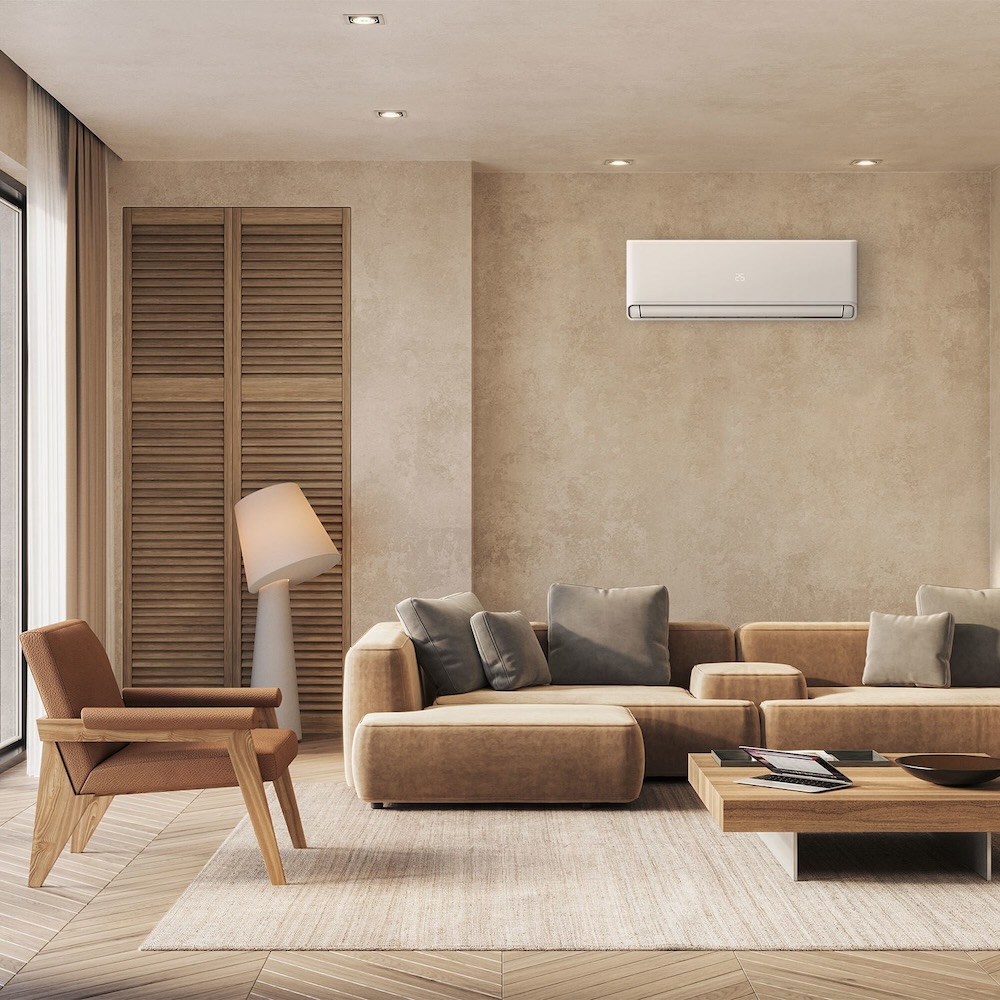
The wall-mounted split system is the most popular choice for UK homes. It has two parts: a slim indoor unit mounted high on a wall, and an outdoor unit (the condenser) placed outside, often on a wall bracket or the ground. The two are connected by a small pipe run through a hole of around 65mm in the wall.
Advantages
- Quiet operation, as the noisiest components are located outside.
- High energy efficiency, especially with inverter-driven models.
- Relatively quick installation, usually completed within a day.
- Provides both heating and cooling in most cases.
Best for
Single rooms such as bedrooms, living rooms, home offices and conservatories. If you only want to cool one or two key spaces, a wall-mounted split is often the most cost-effective option.
2. Multi-Split Systems
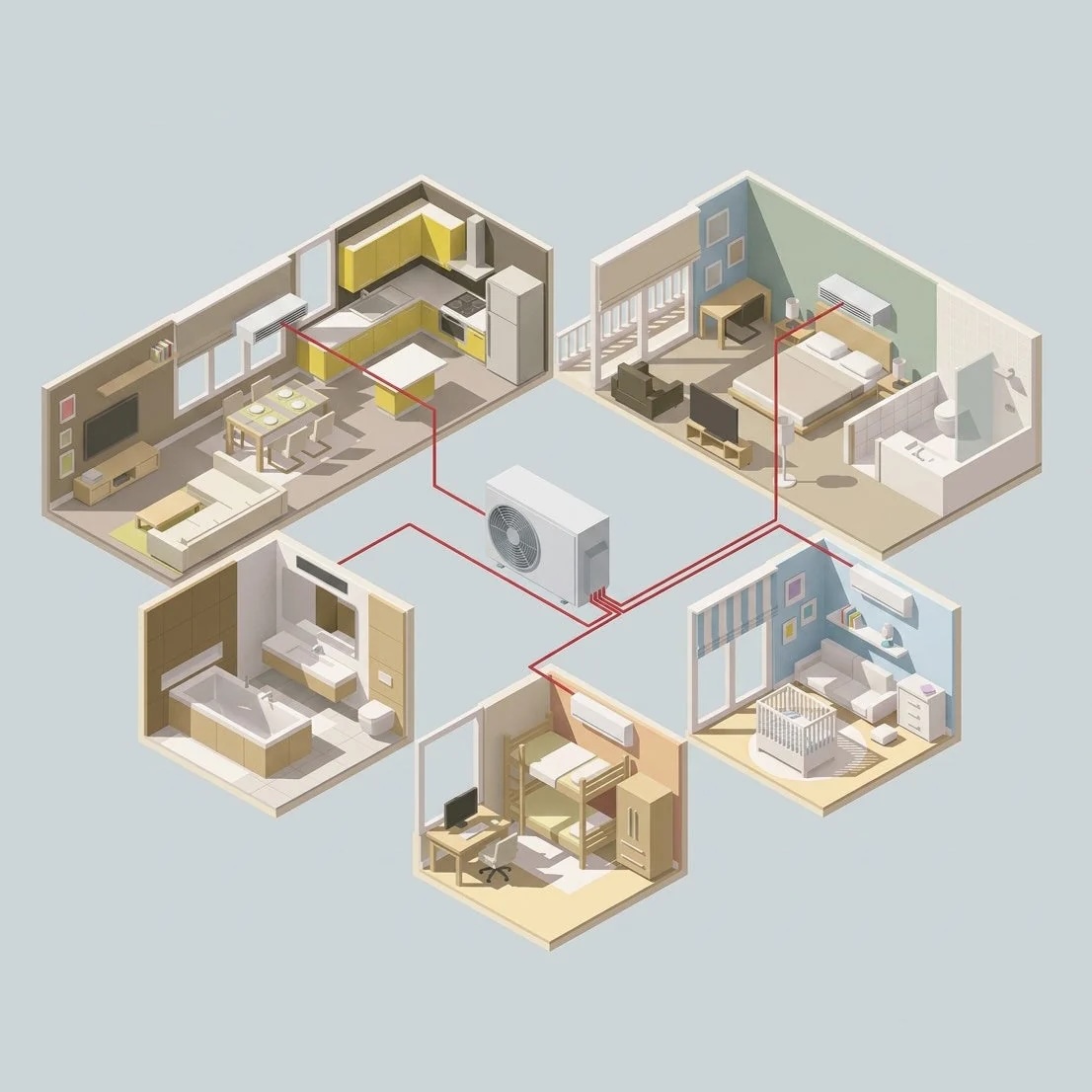
A multi-split system works on the same principle as a standard split, but one outdoor unit powers several indoor units, typically between two and five. Each indoor unit can usually be controlled independently, so you can cool the bedroom while leaving the spare room switched off.
Advantages
- Only one outdoor unit, which saves space and keeps the exterior of your home tidier.
- Individual temperature control in each room.
- Indoor units can be mixed, for example a wall-mounted unit in one room and a floor console in another.
Considerations
If the outdoor unit develops a fault, all connected rooms are affected. Pipe runs also need careful planning, so a professional site survey is essential.
Best for
Homeowners who want to cool several rooms without fitting multiple outdoor units, particularly in terraced or semi-detached properties where outside space is limited.
3. Ducted Air Conditioning
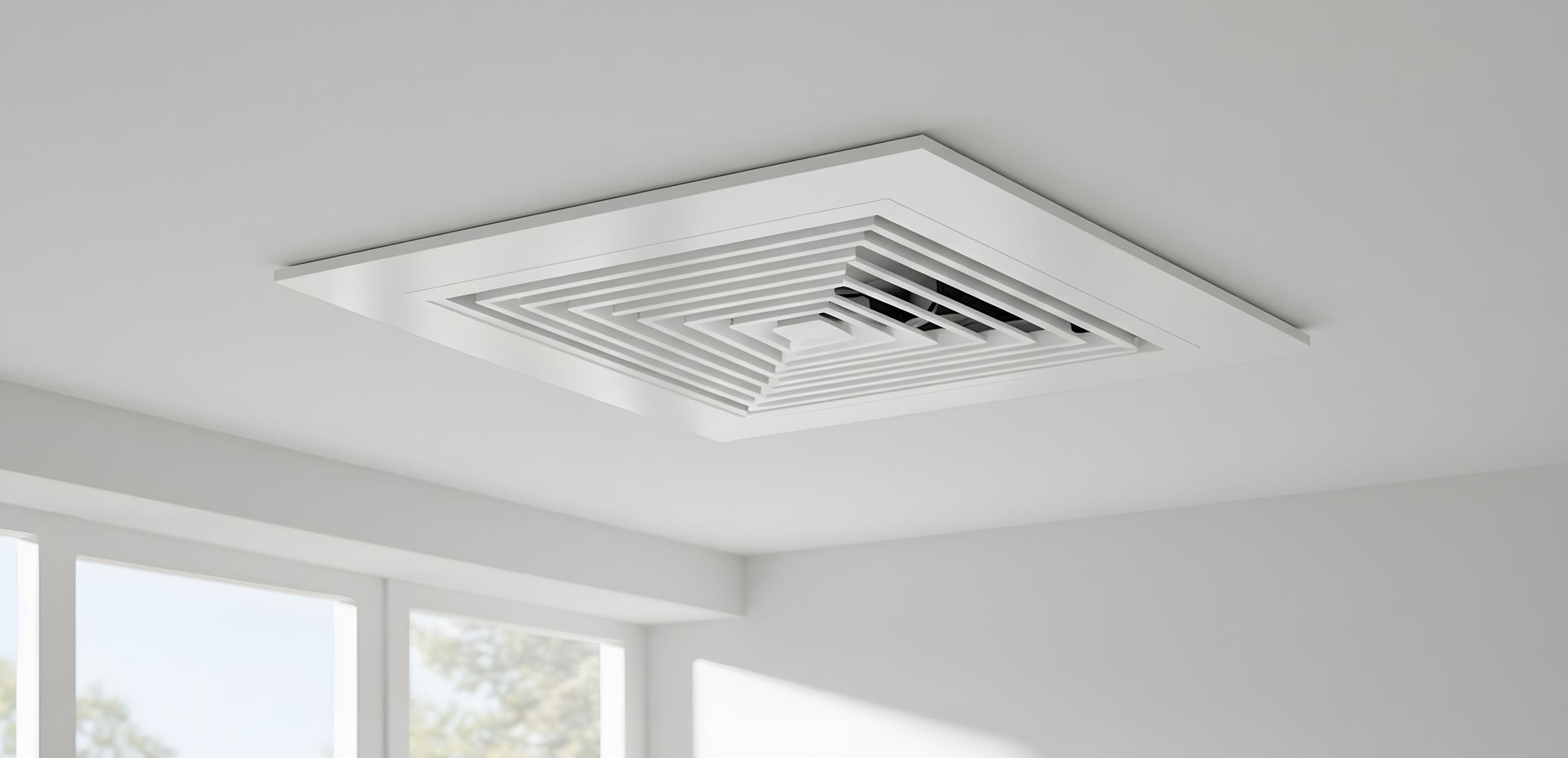
Ducted systems offer whole-home climate control with almost no visible equipment. A concealed indoor unit is installed in a loft, ceiling void or plant cupboard, and conditioned air is delivered to each room through ducts ending in discreet grilles in the ceiling or wall.
Advantages
- Virtually invisible, ideal for homeowners who value a clean interior design.
- Even, consistent temperatures throughout the property.
- Zoning options allow different areas to be controlled separately.
Considerations
Ducted systems have the highest upfront cost and require suitable ceiling or loft space. They are easiest to install during a new build, loft conversion or major renovation, when ceilings are already open.
Best for
Larger homes, new builds, extensions and properties undergoing significant refurbishment.
4. Floor-Standing and Console Units
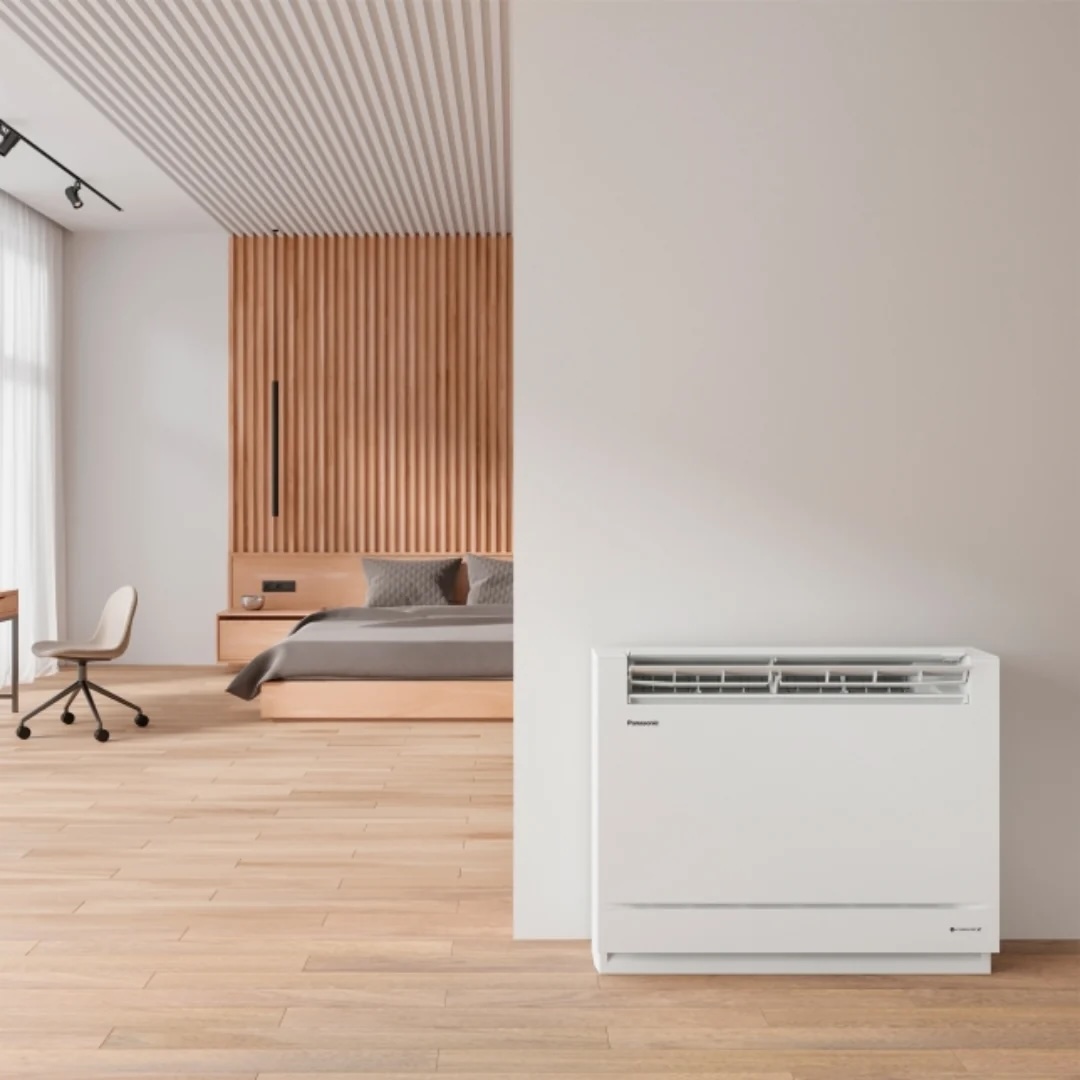
Floor-standing units, sometimes called console units, are a type of split system where the indoor unit sits low on the wall or floor, similar in size to a small radiator. They are particularly good at heating, because warm air is released at floor level and rises naturally.
Best for
Rooms with sloping ceilings, loft rooms, conservatories with limited wall space, or anywhere a high wall position is not practical.
5. Ceiling Cassette Units

Ceiling cassettes are recessed into the ceiling so that only a flat grille is visible. They distribute air in multiple directions, making them effective in larger open spaces. While more common in commercial settings, they are increasingly popular in open-plan kitchens and living areas.
Best for
Large open-plan rooms where you want powerful, even cooling without a wall unit. A ceiling void of sufficient depth is required.
6. Portable Air Conditioners
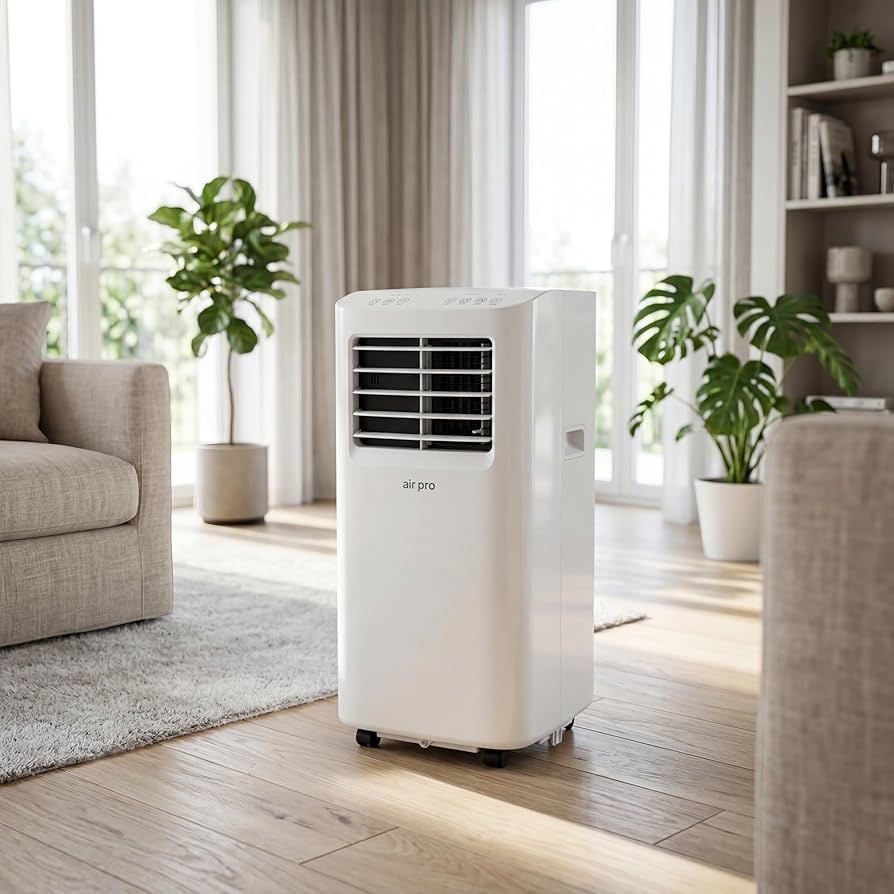
Portable units are free-standing machines on wheels that vent hot air through a hose, usually out of a window. They require no professional installation and can be moved from room to room.
Considerations
Portable units are noticeably louder and far less efficient than fixed systems, and the window hose lets warm air back in. They are best seen as a short-term or temporary solution rather than a long-term investment.
Best for
Renters who cannot make permanent alterations, or anyone needing occasional cooling on a tight budget.
Quick Comparison
| System | Coverage | Visibility | Upfront Cost | Running Costs | Indoor Sound Level |
|---|---|---|---|---|---|
| Wall-mounted split | Single room | Visible wall unit | £££ | £ | Very quiet (approx. 19–40 dB) |
| Multi-split | 2–5 rooms | Visible indoor units | £££ | £ | Very quiet (approx. 20–40 dB) |
| Ducted | Whole home | Grilles only | £££££ | £££ | Quiet (approx. 25–40 dB) |
| Floor console | Single room | Low-level unit | £££ | £ | Very quiet (approx. 22–42 dB) |
| Ceiling cassette | Large rooms | Ceiling grille | £££££ | ££ | Quiet (approx. 27–45 dB) |
| Portable | Single room | Free-standing | £ | £££££ | Noisy (approx. 50–65 dB) |
Things to Consider Before Installing
- Energy efficiency: Look for a high seasonal efficiency rating (SEER for cooling, SCOP for heating). Efficient systems cost more upfront but save money over time.
- Noise levels: Check decibel ratings, especially for bedrooms, and consider where the outdoor unit will sit in relation to neighbours.
- Planning rules: Many installations fall under permitted development, but rules vary, particularly for listed buildings and conservation areas. Your installer should be able to advise.
- Qualified installers: In the UK, anyone handling refrigerant must hold F-Gas certification. Always use a certified engineer to protect your safety, your warranty and the environment.
- Maintenance: Annual servicing keeps your system efficient, hygienic and reliable.
Find the Right System with Zonda Air
Choosing air conditioning is easier with expert advice. At Zonda Air Limited, our F-Gas certified engineers carry out a free site survey to assess your home, discuss your needs and recommend the system that offers the best balance of comfort, efficiency and value. From a single bedroom unit to a fully ducted whole-home system, we handle everything from design to installation and aftercare.
Ready to stay cool this summer and warm this winter? Get in touch with Zonda Air today to book your free, no-obligation consultation.